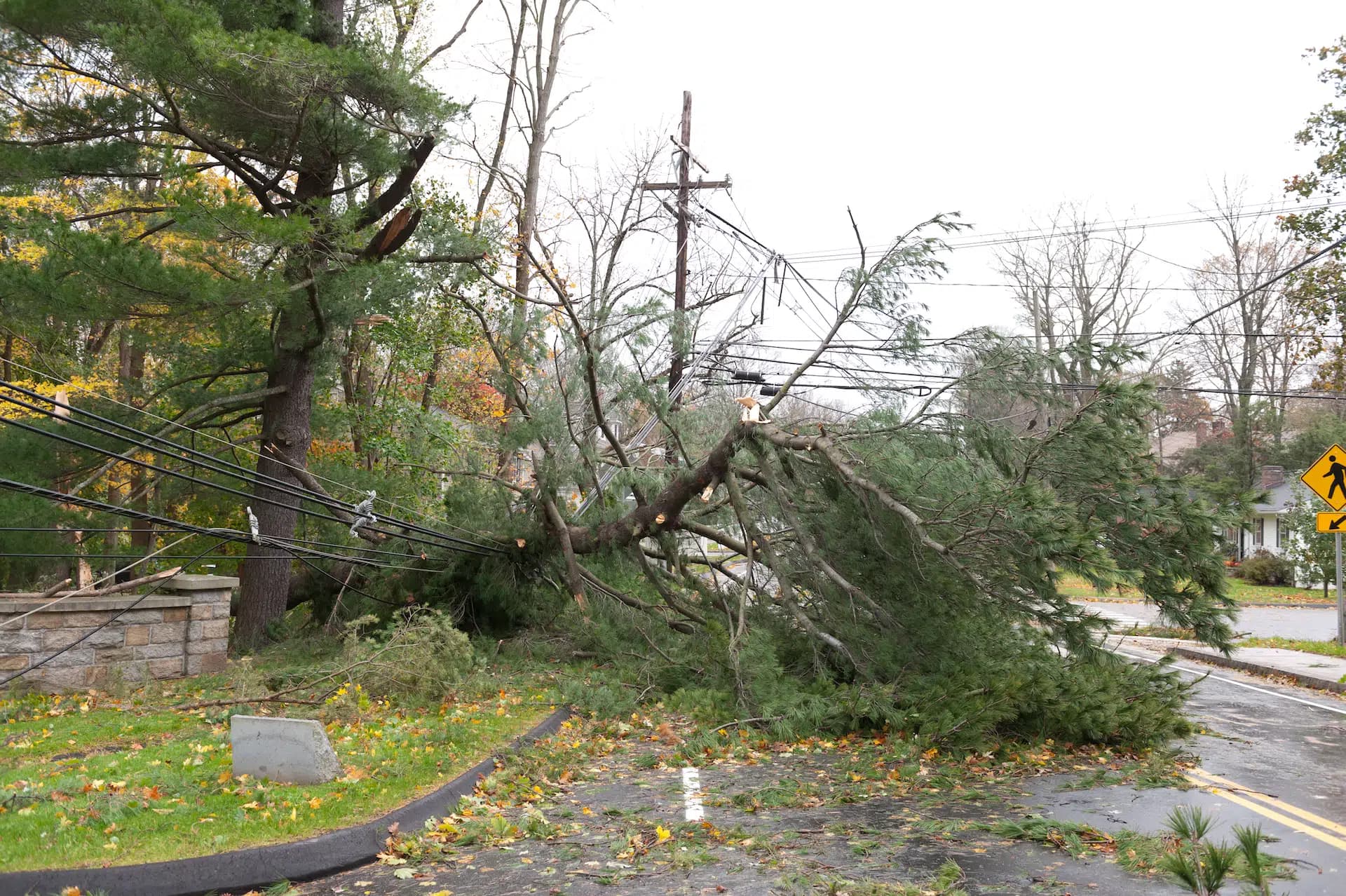
Storm cleanup starts with the safest order of work
After heavy weather, a fallen tree can leave more than one problem on the property. A trunk may block a driveway while limbs rest on a fence, roofline, vehicle, or business entrance. The safest cleanup plan starts by identifying what is under pressure, what could shift, and where the crew can stand and move material without creating another hazard.
United Tree Service looks at the full site before cutting. That includes the tree, the surrounding ground, nearby structures, slope, utility paths, and where brush or logs can be moved. The goal is to reopen access and remove the hazard without rushing the sequence.
Fallen trees often hold hidden tension
A downed tree can look stable while still holding stored pressure in bent limbs, split trunks, or a lifted root plate. Cutting the wrong section first can cause wood to roll, spring, or settle in a different direction. Storm work is handled in smaller steps with the crew watching how each cut changes the load.
This matters on Asheville and Hendersonville properties where slopes, tight driveways, mature hardwoods, and limited staging space are common. The cleanup method has to fit the property instead of forcing every storm job into the same approach.
Access and staging shape the job
Storm calls often happen when a driveway is blocked, a side yard is soaked, or a fallen tree is tangled with other limbs. Before equipment moves in, the crew needs to understand where trucks can sit, where people can work, and how cut material will leave the site. Tight access can change the order of work just as much as the size of the tree.
On mountain roads and wooded lots, a small mistake in staging can slow everything down. United Tree Service plans the path for brush, logs, and crew movement so the cleanup stays controlled from the first cut through the final pass across the work area.
Cleanup includes brush, logs, and debris movement
Once the hazard is controlled, the remaining work is often debris management. Brush may need to be chipped. Logs may need to be cut smaller, stacked, moved, or hauled. Smaller limbs and scattered material need to be gathered so the yard, driveway, parking area, or access path is usable again.
Clear expectations matter. Some property owners want wood left neatly on site, while others want material hauled away. United Tree Service discusses that before work begins so the finished cleanup matches the written quote.
What property owners can expect from the visit
A storm cleanup visit usually begins with a direct look at the failed tree, the surrounding area, and the route from the work zone to the truck or chipper. The crew may point out limbs under pressure, soft ground, nearby fences, or places where debris needs to be moved by hand instead of dragged across finished surfaces.
The written quote should make the scope clear: what will be cut, what will be hauled, whether wood stays on site, and whether related stump grinding or additional trimming should be scheduled. That clarity helps everyone understand when the property will be usable again.
When to call directly
Call directly when a tree has fallen on a structure, blocked a driveway, damaged a fence, or created a hazard near a business entrance. A phone conversation helps the crew understand what happened, where the property is located, and whether the site can be accessed safely.
For storm damage cleanup in Asheville, Buncombe County, Hendersonville, or Henderson County, call United Tree Service at (828) 519-5470. Photos can help, but the quote and work plan depend on an in-person look at the property.